Blog · Cruise control
Cruise control not working? Start with the brake lights.
The most common reason cruise control refuses to engage is a faulty brake light switch: it tells the car the brake is pressed even when it is not, and the car locks cruise out as a safety measure. A 30-second check of your brake lights will tell you if that is the problem.
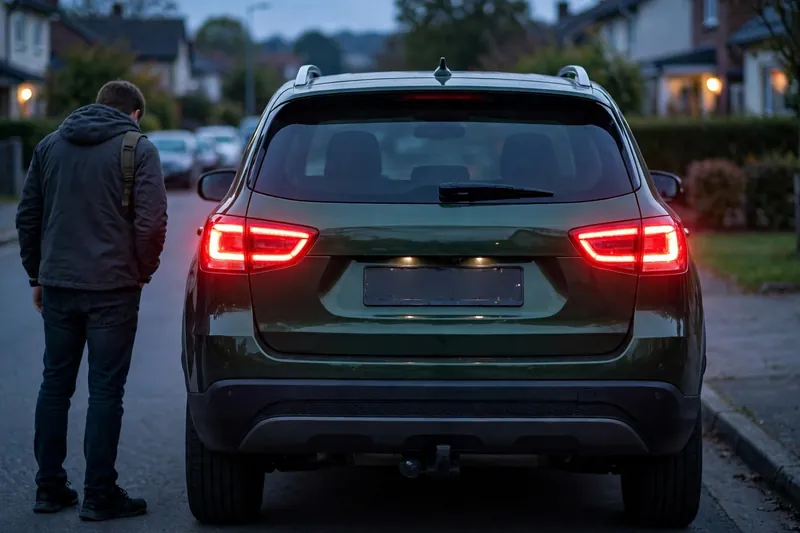
The 30-second check
Park the car, switch the ignition on, and ask someone to stand behind it while you press the brake pedal. You are looking for one of three things:
- Lights come on and go off cleanly. The switch is probably fine. Move on to the fuse.
- Lights stay on after you release the pedal. The switch is stuck in the "pressed" position. The car thinks you are braking permanently, so cruise control will never engage.
- Lights do not come on at all. The switch may have failed, or the brake-light fuse or bulbs are gone. Either way, cruise control is locked out.
If you are alone, reverse up to a shop window or a garage door at night and watch the reflection. It works just as well.
Why a brake switch kills cruise control
The brake light switch does two jobs. One half of it turns on your brake lights. The other half — a separate circuit inside the same small switch, mounted above the brake pedal — tells the cruise control module the instant you touch the pedal, so the system cancels immediately. Safety demands that this cancel signal can never be missed, so the design is deliberately cautious: if the switch sends a confusing or constant "braking" signal, the module assumes the brake is pressed and refuses to engage at all.
The switch can fail in several ways. It sticks. It corrodes. It falls out of adjustment. On some cars a small plastic stopper on the pedal arm crumbles with age, so the switch never gets pressed back to its resting position. And because the cruise-cancel half of the switch is separate from the brake-light half, the fault can be invisible: your brake lights can work perfectly while the cruise circuit inside the same switch is broken. That is why the brake-light check is a strong clue but not a proof — if the lights are fine and cruise still will not engage, the switch is still worth suspecting.
The good news: on most cars the switch is an inexpensive part and a straightforward swap. Repair guides put the part at roughly $20–80, with simple labour on top, and on many cars a confident owner can change it without special tools. Your handbook shows where it sits — usually just above the brake pedal arm.
The usual suspects, in order
Repair guides rank the causes by how often they actually show up, and the list is short. Work through it from cheapest to dearest:
| Cause | What happens | How to spot it |
|---|---|---|
| Blown fuse | Cruise gets no power at all | No dash light, no response from the buttons |
| Faulty brake light switch | Car thinks the brake is always pressed | Brake lights stuck on, or not coming on |
| Bad speed sensor | No trustworthy speed signal to hold | Jumpy or dead speedometer at the same time |
| Clutch switch (manuals) | Car thinks the clutch is pressed | Same lockout as the brake switch, on manuals only |
| Steering-wheel switch / clock spring | SET and RESUME buttons cannot reach the module | Buttons dead; horn or airbag light may also be affected |
| ABS / stability fault | Cruise disabled as a safety precaution | ABS or traction control light on the dash |
Two of these deserve a word of their own. The clock spring is a coiled ribbon of wire inside the steering column that keeps the wheel-mounted buttons connected while the wheel turns. Over years of turning, the ribbon can fatigue and break at the flex points, cutting the signal from the SET and RESUME buttons — and it also carries the airbag and horn circuits, so a failed clock spring is not a job to put off. And on a manual car, the clutch switch does the same job as the brake switch: pressing the clutch cancels cruise instantly, so a misadjusted clutch switch produces exactly the same symptom as a bad brake switch.
The dashboard lights that lock it out
If any warning light is on — check engine, ABS, traction control — cruise control is very likely disabled on purpose. The car's computer will not run a system that holds your speed when it cannot trust the speed signal, the braking system or the stability system. This is not a fault in the cruise control; it is the car protecting you. Fix the underlying fault, clear the light, and cruise usually comes back on its own.
The same logic applies to adaptive cruise control, with one extra cause: a blocked or misaligned radar sensor. Snow, mud or a misaligned bumper after a knock can blind the sensor, and the system will switch itself off rather than guess. Cleaning the sensor area — usually behind the front badge or lower grille — is worth trying before booking a diagnostic.
Before you book a diagnostic
Run through this checklist first — it takes five minutes and it is what a workshop would check first anyway.
- Is the main cruise switch actually on? On many cars the system has a master switch separate from the SET button, and if it is off nothing else will respond.
- Are you going fast enough? Most systems will not engage below roughly 25 mph.
- Is any warning light on — check engine, ABS or traction control? Any one of them disables cruise as a precaution.
- Are the brake lights behaving? Stuck on, or not coming on at all, both point at the switch.
- Is the fuse intact? A blown cruise fuse gives no dash light and no response from the buttons.
If the answer to all five is yes and cruise still will not engage, try one more thing: switch the ignition fully off, wait a minute, and start again. Modern cars run dozens of small computers, and a software glitch can lock a system out until it restarts. If the fault clears, note when it happened; if it comes back, the car has stored a fault code that a diagnostic scan will read in minutes. Do not keep replacing parts on a guess — the scan is cheaper than the second wrong part. Before the workshop, you can sanity-check the speed signal yourself with the free speed tools — a GPS reading that disagrees with the dashboard points at the sensor, not the cruise system.
Once it is working again, it helps to know what the system is actually doing — our guide to how cruise control works explains the sense, compare and adjust loop.
When to see a mechanic
A fuse, a brake light switch and a clean radar sensor are the fixes most owners can try. Beyond that, stop guessing. A clock spring fault involves the airbag circuit, an ABS fault involves the brakes, and a speed sensor fault can affect the speedometer, the gearbox and the stability control all at once. A diagnostic scan takes minutes at a workshop and reads the fault codes the car has already stored — which is faster and cheaper than replacing parts one at a time until the problem goes away. If you have a cheap code reader of your own, look for P0571: that code means the brake switch circuit is faulty, the same switch this post starts with.
And one safety note: if cruise control ever refuses to cancel — the car keeps accelerating after you tap the brake — do not keep driving it. Switch the system off, brake firmly, and get the car checked before using cruise again. A system that will not engage is an inconvenience. A system that will not disengage is a hazard.
FAQ
Questions, answered.
01 Why won't my cruise control turn on at all? +
Most often because a safety interlock is telling the car not to engage it. The top suspects are a blown fuse, a faulty brake light switch that makes the car think the brake is pressed, or a warning light — check engine, ABS or traction control — that disables cruise as a precaution. Work through them in that order: fuse first, then brake lights, then the dashboard.
02 How do I know if the brake light switch is the problem? +
Have someone stand behind the car while you press the brake pedal. If the brake lights do not come on, or if they stay on after you release the pedal, the switch is a strong suspect. The switch does two jobs — it lights the brake lights and tells the cruise system the brake is pressed — so a stuck switch locks cruise out while looking like a lighting fault.
03 Can a blown fuse stop cruise control working? +
Yes, and it is the cheapest fix on the list. The cruise system has its own fuse, and if it blows the system gets no power at all — no light on the dash, no response from the buttons. Check your handbook for the fuse location and rating, and replace it with one of the same rating. If the new fuse blows straight away, there is a short somewhere and the car needs a proper diagnosis.
04 Why does cruise control stop working when the check engine light is on? +
Because the car's computer disables cruise as a safety precaution whenever it cannot trust the data the system needs. A check engine light, an ABS light or a traction control light all mean a fault in a system cruise control depends on — speed sensing, braking or stability. The cruise system stays off until the underlying fault is fixed and the light clears.
05 Can a bad speed sensor stop cruise control? +
Yes. Cruise control needs a steady, believable road-speed signal to hold a speed. If the vehicle speed sensor sends erratic or missing data, the control unit refuses to engage rather than risk holding the wrong speed. A faulty sensor often shows up as a jumpy or dead speedometer at the same time, which is a useful clue. On modern cars the ABS wheel-speed sensors do this job.
Related tools
Check what the car is doing, with GPS.
Sources
Where the facts came from.
- MechanicFixa — Cruise Control Quit Working: A Complete Diagnostic Framework (ranked causes, brake switch $20–80 parts)
- RealTruck — Top 6 Reasons Why Cruise Control Stopped Working (cheapest-first order, brake-light check)
- EngineerFix — Why Is My Cruise Control Not Working? (brake/clutch interlocks, clock spring, VSS)
- EngineerFix — Why Won't My Cruise Control Turn On? (dual-switch design, warning-light lockout)
- StartRescue — 10 reasons cruise control isn't working (spiral cable, LED brake lights, check engine light)
- Offroad Handbook — Jeep Wrangler Cruise Control Not Working: Causes and Fixes (OBD-II code P0571 = brake switch circuit; minimum engage speeds vary by model)
Last checked: 22 November 2026.