Blog · Insurance
Does your car insurance track your speed?
Only if you sign up for it. A standard car insurance policy does not track your speed, your location or anything else about how you drive. But if you enrol in a usage-based insurance programme — the telematics kind — the insurer's app or plug-in device records your speed, hard braking, acceleration, cornering, phone use and the time of day, and turns it into a score that sets your price.
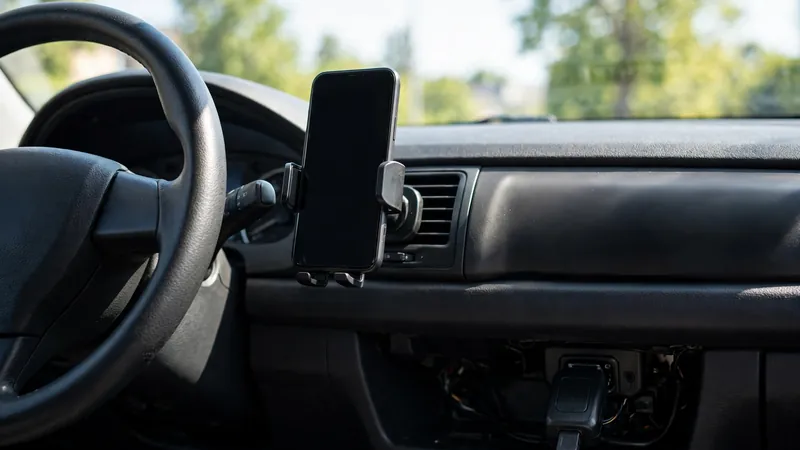
Two kinds of usage-based insurance
Usage-based insurance (UBI) comes in two models, and they track very different things.
- Pay-per-mile (PAYD). The premium follows the odometer. A base rate covers the fixed cost of having a policy, and a per-mile rate covers the variable part. The insurer reads your mileage — through a device, an app, or sometimes just an occasional photo of the odometer — and the monthly bill follows how far you drove. How you drove does not matter, only how far.
- Pay-how-you-drive (PHYD). The premium follows your behaviour. The device or app records hard braking, rapid acceleration, sharp cornering, the hours you drive and your speed, and rolls them into a score. A good score becomes a discount at renewal; in some programmes a poor score can become a surcharge.
Most programmes people mean when they ask "does my insurer track my speed?" are the second kind. Pay-per-mile does not care about your speed at all.
How they track you
If you enrol, your insurer will have you use one of four methods:
- A smartphone app. The phone's GPS and accelerometer stand in for a device. Nothing to install, but the app has to run with location permission, it uses battery, and it can confuse a passenger's trip with the driver's.
- A plug-in OBD-II device. A dongle that goes into the diagnostic port under the dashboard, usually near the steering column. It works on any car built after 1996, and it is the most established method — but it must stay plugged in.
- A Bluetooth beacon. A small tag in the car that pairs with the insurer's app and confirms which trips are yours.
- Factory telematics. Some cars ship with a connected data platform — OnStar is the best-known example — that sends driving data with no installation at all.
The first usage-based programmes appeared in the US more than a decade ago, when Progressive and GMAC began offering mileage-linked discounts through GPS and cellular tracking. The idea has spread since, but slowly: only 17% of insurers offered a usage-based programme in 2025, according to J.D. Power.
What exactly gets measured
The US National Association of Insurance Commissioners lists the signals telematics devices measure: miles driven; time of day; where the vehicle is driven (GPS); rapid acceleration; hard braking; hard cornering; and airbag deployment. In practice, the score is built from events like these:
| Signal | What it is taken to mean |
|---|---|
| Miles driven | Exposure to loss — more miles, more chances of a claim |
| Speed | Driving above the limit or the flow of traffic |
| Hard braking | Following too closely, or not paying attention |
| Rapid acceleration | Aggressive driving |
| Sharp cornering | Speed relative to the road's geometry |
| Time of day | Night driving carries higher crash risk |
| Phone handling | Distraction (app-based programmes, where permitted) |
Each drive is tracked, and you can usually see individual trips and the incidents that lowered your score. The score itself typically updates every week or so, depending on the programme.
What it does to your price
The usual deal has two parts. First, a sign-up discount when you enrol, applied at your first billing cycle. Second, a larger discount at renewal if your driving score is good enough. The insurer combines the telematics data with the traditional rating factors — your age, address, car and claims history — so the score adjusts the price rather than setting it from scratch.
What the big programmes actually pay, from the insurers' own pages:
| Programme | Just for signing up | What good driving can earn |
|---|---|---|
| Progressive Snapshot | $164 average discount | $328 average a year, for drivers who save |
| State Farm Drive Safe & Save | 10% initial participation discount | Up to 30% off |
| Allstate Drivewise | Discount just for enrolling (amount varies by state) | Ongoing participation discount while you stay active |
Read the table the right way round. The sign-up discount is guaranteed and small; the big number is a maximum, not a promise. Progressive is also honest about the downside in a way most adverts are not: about 2 in 10 Snapshot drivers actually see their rate go up. And the programmes are not everywhere — Drive Safe & Save is not available in California, Massachusetts or Rhode Island, and Drivewise savings are not available in California or Alaska. The discount on offer where you live is the only one that counts.
That is the pitch. The honest limit is that every one of these signals is a proxy, not a measurement of the thing the insurer actually cares about — whether you cause a claim. Hard braking can mean tailgating, or it can mean a child ran into the road. A night-time drive can be a tired commuter or a careful shift worker. The score correlates with risk; it does not determine it. And the same GPS data that prices your policy can reconstruct where you drive: researchers have shown that location can be inferred from speed and distance data alone, even without a GPS fix.
The privacy trade, honestly
Continuous GPS tracking is a location history of your life — where you sleep, where you work, where you go at 2 a.m. That is the main objection regulators raise, and it is a fair one. The counter-argument is that the trade is voluntary: nobody is forced into a telematics programme, and the discount is the price the insurer pays for the data. But "voluntary" is thinner than it sounds when the discount is large and the standard policy keeps getting more expensive.
Before you enrol, read the programme's own terms: what data is collected, how long it is kept, whether it is shared, and whether a poor score can raise your price. Those answers are in the contract, not in the advert. And remember that the tracking is one-way — the insurer's app knows your speed, but it will not tell you whether your dashboard is accurate. For that, you need GPS on your own terms: our car speed test compares your dashboard with live GPS speed, and your location never leaves your device.
How to read the score
The score is the part you live with, so it is worth knowing how it moves. Each drive is tracked, and you can usually see individual trips with the incidents that lowered your score marked on them. A hard-braking event counts against you; a smooth week with no events counts for you. The score typically updates every week or so, depending on the programme, and the discount it produces is applied at renewal — not trip by trip.
The levers are the obvious ones: leave a bigger gap and you brake less hard; accelerate gently and you avoid the rapid-acceleration flag; drive in daylight and you avoid the night-driving penalty. What you cannot change is the routine itself. If your job means night driving or long motorway commutes, the score will read that routine as risk no matter how carefully you drive — which is why the programme suits some drivers and not others. Check the score weekly for the first month: if it is not moving in your favour, the programme is probably not for you, and a conventional policy will be cheaper.
Who it suits — and who it does not
- Suits: careful, low-mileage, daytime drivers. Short trips, gentle braking, no night driving — the profile the score rewards most.
- Does not suit: night-shift workers, long commuters, and anyone who brakes hard in traffic every day. The score will read your routine as risk, even if your driving is careful.
If the programme does not fit, a conventional policy may still be the better deal — and with only 17% of insurers offering telematics, most of the market is still priced the old way.
How to leave a telematics programme
Enrolling is not a life sentence. You can leave a programme by removing the plug-in device or deleting the app and telling your insurer — and your price then goes back to being set the standard way at renewal. Ask the insurer two things before you leave: whether the sign-up discount ends straight away, and how quickly they stop collecting your driving data. The answers are in the programme's own terms, and they vary. If you enrolled through your car's built-in telematics, the switch-off is in the car's connected-services settings or through the manufacturer, not in the insurer's app.
Related reading: how accurate is police radar — and the 13 ways a radar reading can be wrong.
FAQ
Questions, answered.
01 Does my car insurance track my speed without me knowing? +
No — not on a standard policy. An insurer cannot track your driving unless you enrol in a usage-based insurance programme and install its app or device. A normal policy is priced on who you are on paper — your age, address, car and claims history — not on how you drive. Tracking only starts when you opt in, usually in exchange for a discount.
02 What does a telematics app actually record? +
Miles driven, speed, rapid acceleration, hard braking, sharp cornering, the time of day you drive, and in app-based programmes, phone handling. The US regulator NAIC lists exactly these signals: miles, time of day, GPS location, rapid acceleration, hard braking, hard cornering and airbag deployment. The app or device turns them into a driving score, which the insurer uses to set your price at renewal.
03 Can usage-based insurance raise my premium? +
In most programmes, no — the usual deal is a sign-up discount when you enrol, and a bigger discount at renewal if your score is good enough. But some pay-how-you-drive programmes can apply a surcharge for a poor score, so the terms matter. Read the programme's own rules before you enrol: the discount is the promise, but the small print decides whether a bad score can cost you money.
04 How does the insurer track my driving? +
Four ways. A smartphone app uses the phone's GPS and accelerometer. A plug-in OBD-II device goes into the diagnostic port under the dashboard — it works on any car built after 1996. A Bluetooth beacon pairs with the insurer's app. Or factory telematics already built into the car, such as OnStar, sends the data with no installation at all. The method decides how much data the insurer sees and how often.
05 Is usage-based insurance worth it? +
For a careful, low-mileage, daytime driver, usually yes — the discount rewards exactly that profile. State Farm advertises up to 30% off for safe driving, and Progressive says drivers who save with Snapshot save $328 a year on average. For a night driver, a long-distance commuter, or anyone who brakes hard in traffic every day, the score may not beat a standard policy. Only 17% of insurers offered a usage-based programme in 2025, according to J.D. Power, so shop around.
Related tools
Your speed, on your terms.
Sources
Where the facts came from.
- Progressive — Snapshot ($164 average discount at sign-up; $328 average a year for drivers who save; about 2 in 10 drivers see their rate rise)
- State Farm — Drive Safe & Save (10% initial participation discount; up to 30% for safe driving; not available in CA, MA, RI)
- Allstate — Drivewise (discount just for enrolling, amount varies by state; ongoing participation discount while active; savings not available in CA and AK)
- Insurance Journal — Customers' Search for Better Auto Rates Has UBI Heating Up (J.D. Power 2025 U.S. Auto Insurance Study: 17% of insurers offered UBI programmes to shoppers in 2025)
- NAIC — Telematics / Usage-Based Insurance (measured signals, first UBI programmes, pricing)
- Wall Street Journal — How Does Usage-Based Car Insurance Work? (tracking methods, scoring, 17% of insurers in 2025 per J.D. Power)
- Wikipedia — Usage-based insurance (PAYD/PHYD types, privacy limits, location inference)
- Washington Office of the Insurance Commissioner — Usage-Based Insurance (what insurers track, privacy downside)
- InsurTool — Usage-Based Insurance (UBI) (pay-per-mile vs pay-how-you-drive, score as proxy)
Last checked: 22 November 2026.