Blog · Calibration
Speedometer recalibration: when, how, and what it costs
A speedometer recalibration is usually a $50–$200 shop job — about an hour of labour to reprogram the car's computer with the correct tyre size. It is needed whenever something changes how far your wheels travel per revolution, and it is the fix when the dashboard reads wrong by the same percentage at every speed.
Why a speedometer goes out of calibration
A speedometer does not measure speed directly. It counts how fast something spins — a transmission output shaft or a wheel hub — and multiplies by an assumed tyre circumference. Change the real circumference and the number on the dash drifts away from the truth, even though nothing is broken.
The usual triggers are bigger or smaller tyres, different wheels, an axle-ratio change, a lift kit, or a transmission swap. A cluster replacement can do it too, because the new cluster may need programming to match the car. And sometimes the trigger is nothing at all: the car has read a few percent high since the factory, which is normal — regulators in R39 countries require a speedometer never to read low, and allow it to read high by up to 10% plus 4 km/h at type approval — and the owner only notices when they compare it with GPS for the first time.
The maths is simple. A tyre 3% larger in diameter covers 3% more ground per revolution, so at the same wheel speed the car is going 3% faster than the dashboard thinks: a dashboard reading of 60 mph means a true 61.8 mph. A tyre 3% smaller does the opposite — the dashboard reads 60 mph while the car is doing 58.2 mph. A bigger real-world change makes the point clearer: swapping 32-inch tyres for 35-inch ones changes the diameter by about 9.4%, so a dashboard reading of 60 mph means a true speed of about 65.6 mph — fast enough for a ticket while the dial still looks legal. That is why the direction matters: a speedometer that reads low is the dangerous one, because it can put you over the limit while the dial looks legal.
First, check whether it actually needs it
Do not pay for a recalibration on a single glance at two numbers. The check is a short, repeatable test: mount a phone with a GPS speedometer, drive a straight, level road, hold a steady speed with cruise control for 15–20 seconds, and have a passenger record the dashboard and the GPS at the same moment. Repeat at 30, 50 and 70 mph, and in both directions. Both the GPS test and the error calculator are in the free speed tools.
Then work out the error: (dashboard − GPS) ÷ GPS × 100. If the dashboard shows 70 mph and GPS says 67 mph, the error is (70 − 67) ÷ 67 × 100 = +4.5%, and the dashboard reads high. If the error is about the same percentage at every speed, it is a calibration problem — tyre size or programming. If the error grows with speed, or the needle jumps, it is more likely a sensor or cluster fault, and recalibrating will not fix it.
A timed mile is the no-signal alternative: time one mile between mile markers with a stopwatch, and true mph is 3,600 ÷ seconds. Sixty seconds is exactly 60 mph; 51.4 seconds is 70 mph. Our speedometer error calculator does the whole calculation from either method and builds a correction table for the speeds you actually drive at.
How shops recalibrate a speedometer
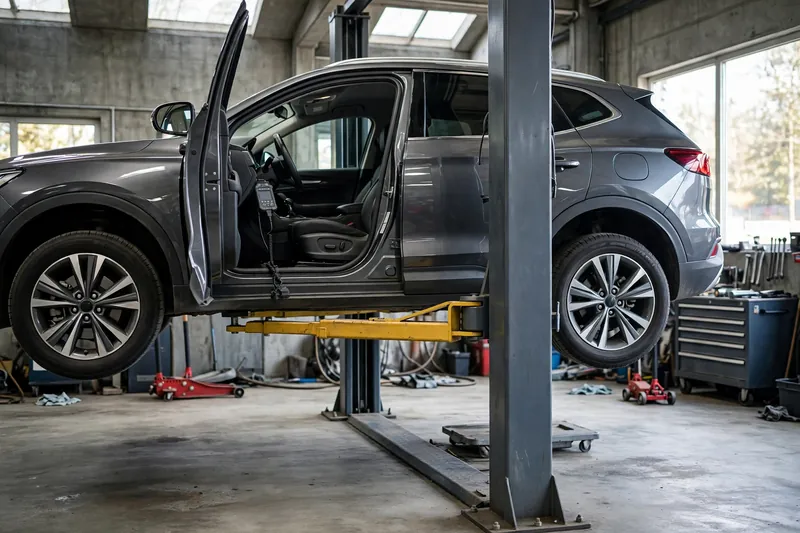
On a modern electronic car, recalibration is a software job. A technician plugs a diagnostic tool into the OBD-II port and writes the correct tyre size — or the correct pulses-per-mile figure — into the car's computer. The whole job is often about an hour of labour, which is why the $50–$200 range is so common. Some shops will also put the car on a dynamometer and certify the result, which is the version you want if the calibration is for a speeding-ticket defence: a certified test with a printed result carries weight in court, and an uncertified one does not.
On an older car with a mechanical cable speedometer, there is no computer to reprogram. The fix is a driven gear swap inside the transmission: a different-toothed gear changes the cable speed to match the new tyre size. The gear itself costs $10–$40 in parts, and the job takes under an hour. It is more technical than it sounds, and it is the one recalibration job that is usually not a sensible DIY project.
A third route is an inline signal calibrator: a small box wired between the speed sensor and the cluster that scales the signal up or down. It costs $100–$250 plus fitting, and it is the usual answer for vehicles the dealer's software cannot adjust — older trucks, modified 4x4s, and cars with swapped axles.
The DIY route
A handheld programmer plugs into the same OBD-II port the shop uses and lets you enter the new tyre size yourself. One costs $150–$450 to buy, which pays for itself if you change tyre sizes more than once, and most also read and clear trouble codes. The catch is compatibility: check that the programmer supports your exact year, make and model before you buy it, because a wrong setting can also corrupt the odometer reading and the transmission shift points.
One thing a DIY recalibration cannot do is certify itself. If you need a calibration certificate — for a ticket, for a sale, or for a modified-vehicle inspection — a shop has to do it and put it in writing. A home reprogram with no paperwork is fine for your own driving, and useless as evidence.
What it costs, side by side
| Method | Typical US cost | Notes |
|---|---|---|
| Dealer or shop reprogram | $50–$200 | Often ~1 hour of labour |
| Handheld programmer (DIY) | $150–$450 to buy | One-time purchase, check compatibility |
| Inline signal calibrator | $100–$250 + fitting | For vehicles software cannot adjust |
| Driven gear swap (mechanical) | $10–$40 in parts | Plus labour, usually under an hour |
| Dynamometer test + certificate | $75–$200 | The version a court wants |
| Professional truck calibration | $100–$120 | Includes testing and adjustment |
These are ballpark figures from US sources; prices vary by vehicle and region. A full cluster replacement is a different job entirely — $748–$757 on average for the part and labour — and it is only needed when the cluster itself is damaged, not when the calibration is wrong.
After the recalibration: verify it
A recalibration is not finished when the shop hands the keys back. Re-run the same GPS test you ran before the job: hold a steady speed with cruise control on a straight, level road, and compare the dashboard against GPS at 30, 50 and 70 mph. The error should now be close to zero, or at most the small factory over-read the maker built in. If the error is still the same as before, the wrong tyre size was entered, or the fault was never a calibration problem in the first place.
Keep the paperwork. A shop invoice that lists the tyre size entered and the before-and-after readings is the proof the job was done, and it is what a buyer, an inspector or a court will ask for. A home reprogram with no paperwork is fine for your own driving, and useless as evidence.
The odometer comes along for the ride
The speedometer and the odometer share the same speed signal, so a calibration error hits both. If the speedometer reads 3% high, the odometer is also counting about 3% too many miles — roughly 270 phantom miles a year for a car driven 9,000 miles. Fixing the calibration corrects both at once. The reverse is also true, and it is the reason to be careful: a wrong recalibration quietly inflates or deflates your recorded mileage, which matters at resale and can look like odometer tampering if it is discovered later. Get the number right, and keep the paperwork.
FAQ
Questions, answered.
01 How much does speedometer recalibration cost? +
A dealer or shop reprogram usually costs $50–$200, often about an hour of labour. A handheld programmer to do it yourself costs $150–$450 to buy, an inline signal calibrator is $100–$250 plus fitting, and a driven-gear swap on an older mechanical speedometer is $10–$40 in parts. Prices vary by vehicle and region, so get a quote first.
02 When do I need my speedometer recalibrated? +
After anything that changes the distance your wheels cover per revolution: bigger or smaller tyres, different wheels, an axle-ratio change, a lift kit, or a transmission swap. Also after a cluster replacement, and whenever the dashboard reads wrong by a steady percentage that a GPS check confirms.
03 Can I recalibrate my speedometer myself? +
On many modern cars, yes — with a handheld programmer that plugs into the OBD-II port and lets you enter the new tyre size. It is a straightforward job on vehicles the programmer supports, and a risky one on vehicles it does not, because a wrong setting can also corrupt the odometer and the transmission shift points. Check compatibility first.
04 How do I know if my speedometer needs recalibrating? +
Compare it against GPS on a straight, level road at a steady speed. If the dashboard reads wrong by the same percentage at 30, 50 and 70 mph, it is a calibration problem, not a broken sensor. A single glance is not enough — hold each speed for 15–20 seconds and repeat in both directions before you decide.
05 Does recalibrating the speedometer fix the odometer too? +
Usually yes, when the error is in the calibration itself, for example the wrong tyre size. The speedometer and the odometer share the same speed signal, so if the speedometer reads 3% high, the odometer is also counting about 3% too many miles. It does not apply to a factory display bias: on many modern cars only the display is biased, while the odometer counts the raw pulses and stays accurate. Fixing the calibration corrects both, so a wrong recalibration can inflate or deflate your recorded mileage.
06 Is it illegal to drive with an inaccurate speedometer? +
There is no US federal accuracy standard for passenger-car speedometers, so the question is really about speeding: if your speedometer reads low, you can be fined for the speed you were actually doing, whatever the dashboard said. Trucks and buses are different — federal rules require them to read within ±5 mph at 50 mph.
07 How to change a car's speedometer reading +
Change the calibration, not the mileage. A lawful speedometer recalibration means reprogramming the car's computer (the ECU) — usually through the OBD-II port — with the correct tyre size or pulses-per-mile figure, or swapping the driven gear on an older mechanical speedometer. Then verify the result against GPS. That is a different job from changing the odometer reading itself: rolling back mileage to show fewer miles is a federal crime, and a wrong recalibration that shifts the recorded mileage can look like tampering.
Related tools
Check the error, then fix it.
Sources
Where the facts came from.
- SpeedReflex — How to Calibrate a Speedometer (and Check It With GPS) (dealer/shop reprogram ~$50–$200, ~1 hour labour; handheld programmer $150–$450; inline calibrator $100–$250 + fitting; driven gear $10–$40)
- AutoZone — How to Recalibrate a Speedometer ($50–$200 professional or DIY)
- CostHack — Speedometer Recalibration Cost (~$75 no parts, ~$125 with parts; gear $10–$50; labour $60–$200/hr; ~$100 reasonable total for mechanical)
- CarParts.com — Speedometer Calibration Explained ($50–$100 calibration; cluster programming $50–$200)
- Speedometera — Speedometer Calibration Calculator (error % formula; 70 vs 67 = +4.5%; timed mile 3,600 ÷ seconds; no FMVSS limit for passenger cars; trucks/buses ±5 mph at 50 mph, 49 CFR 393.82)
- EatHealthy365 — Are Car Speedometers Accurate? (dynamometer calibration $75–$200)
- TireShopSunrise — How to Calibrate Speedometer for Bigger Tires: Costs (32-inch to 35-inch tyres ≈ 9.4% error; indicated 60 mph ≈ 65.6 mph true)
- Alibaba — How to Choose Truck Speedometer Calibration: Price & Buying Guide (professional truck calibration $100–$120; full instrument cluster replacement averaging $748–$757)
- NHTSA — Odometer tampering interpretation (Odometer tampering is a federal crime (disconnecting resetting or altering an odometer with intent to change the miles indicated))
Last checked: 24 November 2026.